


The Medicaid work requirements come from H.R. 1, signed on July 4, 2025. On June 1, 2026, CMS issued the Medicaid work requirements interim final rule, which sets out how states must run these Medicaid community engagement requirements. States must have the 2027 Medicaid work requirements in place by January 1, 2027, and a few have already started. States that run into serious problems can request an extension to December 31, 2028.
Starting January 1, 2027, millions of adults on Medicaid will need to prove they work, study, or volunteer to keep their coverage. For your practice, that means more patients losing coverage between visits and more claims coming back denied. This guide explains the Medicaid work requirements for 2027, who they apply to, and how your team can prepare.
Who Must Meet the New Medicaid Work Requirements?
The Medicaid 2027 work requirements cover adults ages 19 to 64 who get Medicaid through the ACA expansion group or certain section 1115 waivers. People who are pregnant or on Medicare are left out. According to CMS, 43 states and Washington, D.C. are affected, and HHS has published the full rule for anyone who wants the details.
How Many Hours Must Patients Work to Keep Medicaid?
The Medicaid 80-hour work requirement asks covered adults to log at least 80 hours a month of paid work, community service, a work program, or half-time school, in any combination. Earning at least $580 a month, which is 80 times the federal minimum wage, also counts. Seasonal workers can average their income over six months.
Who is Exempt from Medicaid Work Requirements?
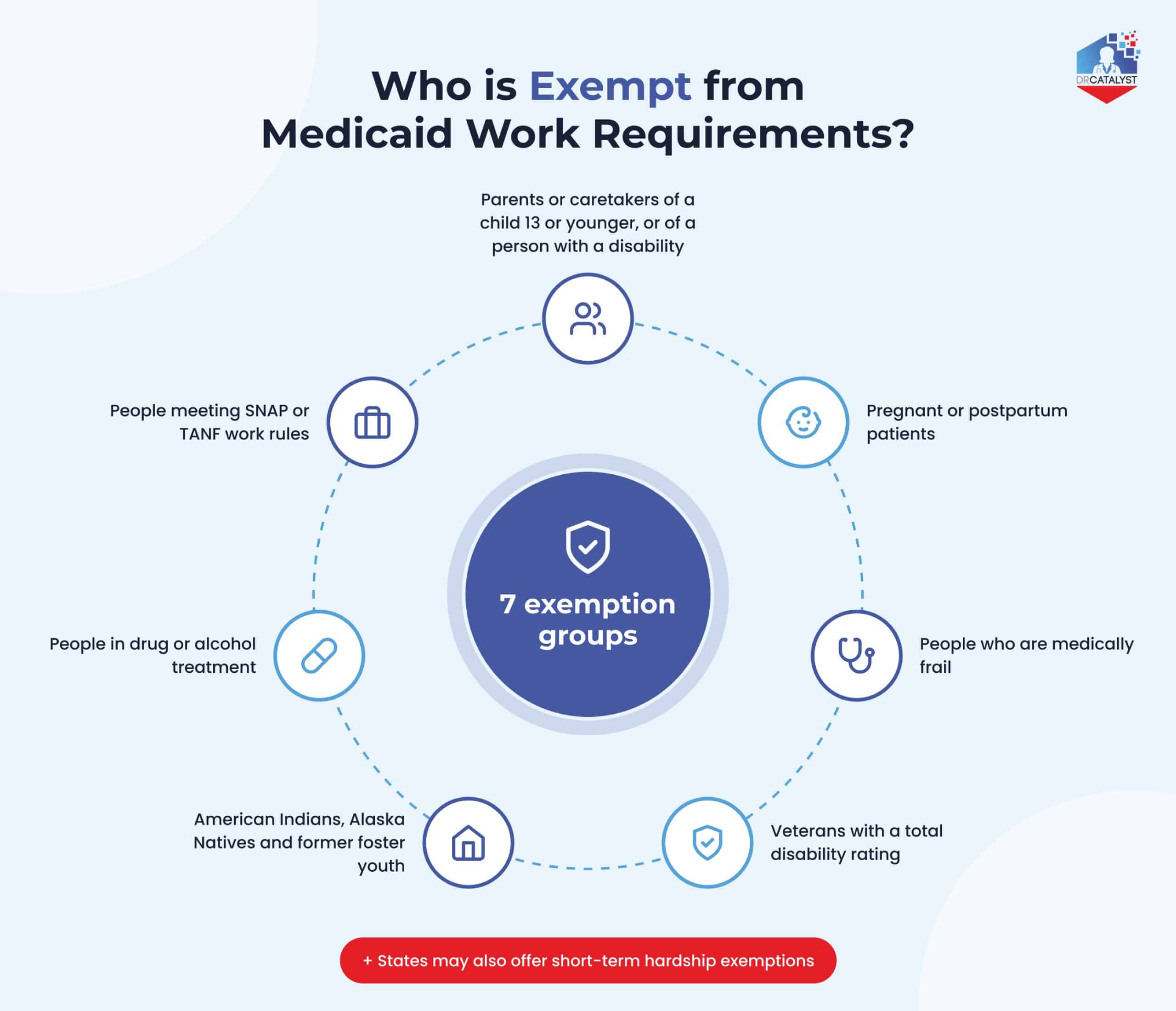
The interim final rule lists these Medicaid work requirement exemptions:
Parents or caretakers of a child 13 or younger, or of a person with a disability
Pregnant or postpartum patients
People who are medically frail
Veterans with a total disability rating
American Indians, Alaska Natives and former foster youth
People in drug or alcohol treatment
People meeting SNAP or TANF work rules
States may also offer short-term hardship exemptions. The medically frail exemption needs proof that a condition limits a patient’s ability to work, so clear clinical documentation can help patients keep it. Adults with disabilities who don’t receive SSI may still have to prove they qualify.
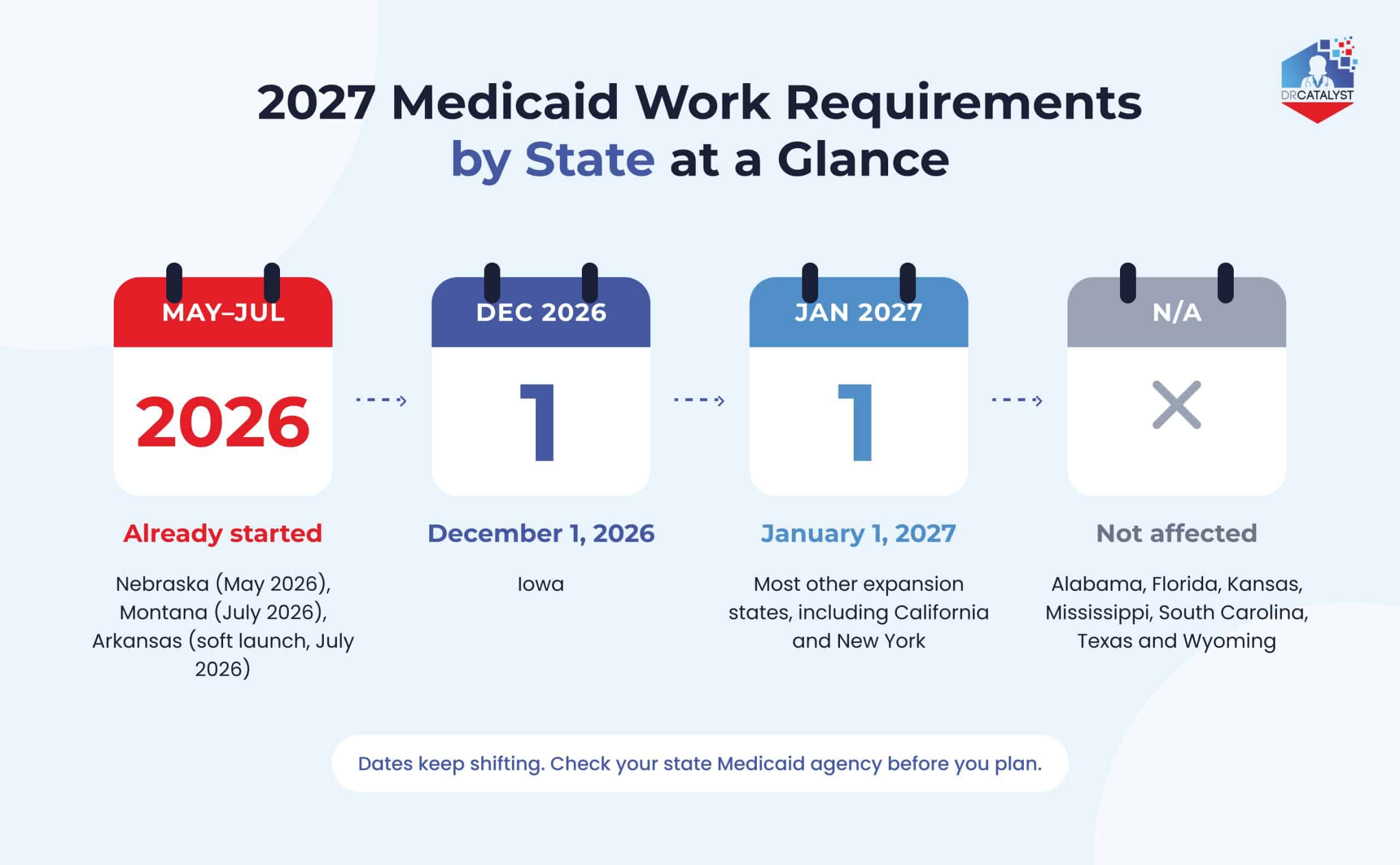
When Do Medicaid Work Requirements Start in Each State?
Georgia’s Pathways program runs through 2026 before the federal rules apply. In California, Medi-Cal checks begin with March 2027 renewals, and the California Department of Health Care Services has outlined the other H.R. 1 changes coming to Medi-Cal. Because Medicaid work requirements by state keep shifting, check your state Medicaid agency before you plan.
How Will States Verify Medicaid Compliance?
States check compliance at application and at every renewal. They must first use data they already have, such as payroll records and Medicaid claims, before asking patients for documents. New applicants must show at least one compliant month before applying, and current members must show at least one between renewals. If the state can’t confirm compliance, the patient gets 30 days to respond before coverage is denied or ended.
What Happens When Patients Lose Medicaid Coverage?
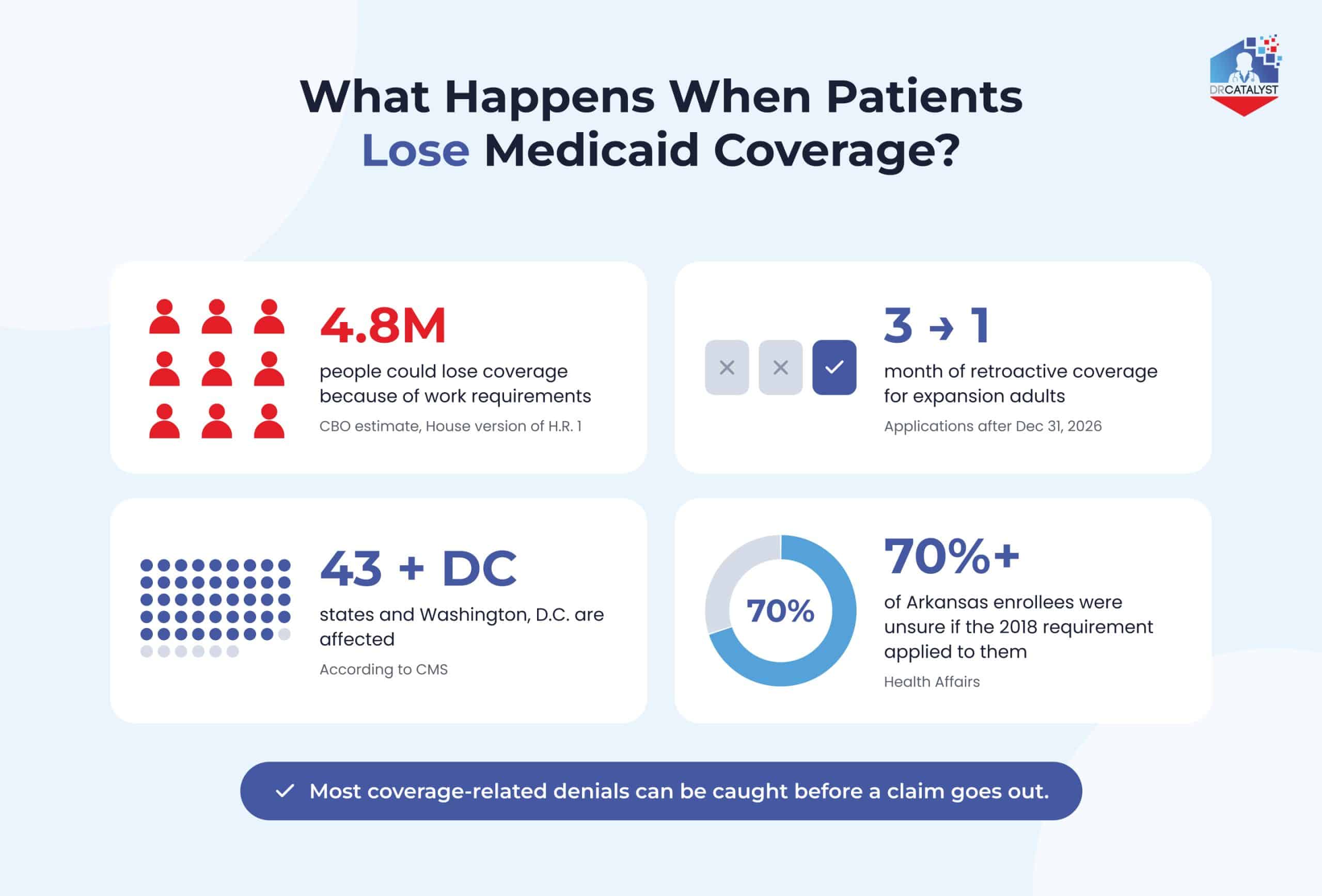
When it scored the House version of the bill, the Congressional Budget Office estimated that about 4.8 million people could lose coverage because of work requirements. For practices, that shows up as denied claims, rescheduled visits, and unpaid balances. Recovering costs also gets harder: for applications after December 31, 2026, expansion adults get one month of retroactive coverage instead of three. Patients can reapply at any time, but the gap is where revenue slips.
As our look at how many claim denials are preventable shows, most of these problems can be caught before a claim goes out. History backs this up. When Arkansas added work requirements in 2018, research in the New England Journal of Medicine found that coverage fell while employment did not rise.
How Medical Practices Can Prepare for Medicaid Work Requirements
Verify coverage before every visit: With six-month renewals, tighten the eligibility verification process in medical billing so coverage is checked at scheduling and again before the visit.
Flag affected patients: Note Medicaid expansion adults aged 19 to 64 and their renewal dates.
Document conditions: Clearly support medical frailty exemptions.
Remind patients: Patients need to update their address and open every letter from Medicaid. In Arkansas, more than 70% of enrollees were unsure whether the work requirement even applied to them.
Track coverage-related denials: Keep a check on them each month to spot trends early.
How DrCatalyst Helps Practices Stay Ahead
DrCatalyst gives practices trained remote staff who handle this work every day. When you outsource insurance eligibility verification services to us, our team confirms Medicaid coverage and renewal status before patients arrive. Our denial management team works coverage-related denials quickly, a virtual phone receptionist can remind patients about renewals and update their contact details, and our revenue cycle management services keep claims moving as eligibility rules change.
In Short
The Medicaid work requirements 2027 rollout under H.R. 1 will make coverage change more often, and every change puts a claim at risk. Practices that verify coverage before each visit and catch denials early will feel it least. Schedule a free consultation with DrCatalyst to get your team ready before January.
FAQs
Yes. Medi-Cal’s requirement starts January 1, 2027, for adults 19 to 64 covered through the ACA expansion. DHCS estimates 4.8 million members are in this group, and about 2.2 million are expected to qualify for an exemption.
Not on its own. However, many health conditions common among people without stable housing can qualify a patient as medically frail.
Keep their contact details current with Medi-Cal, open every letter from Medi-Cal or the county, and contact their county office with questions.